
About me
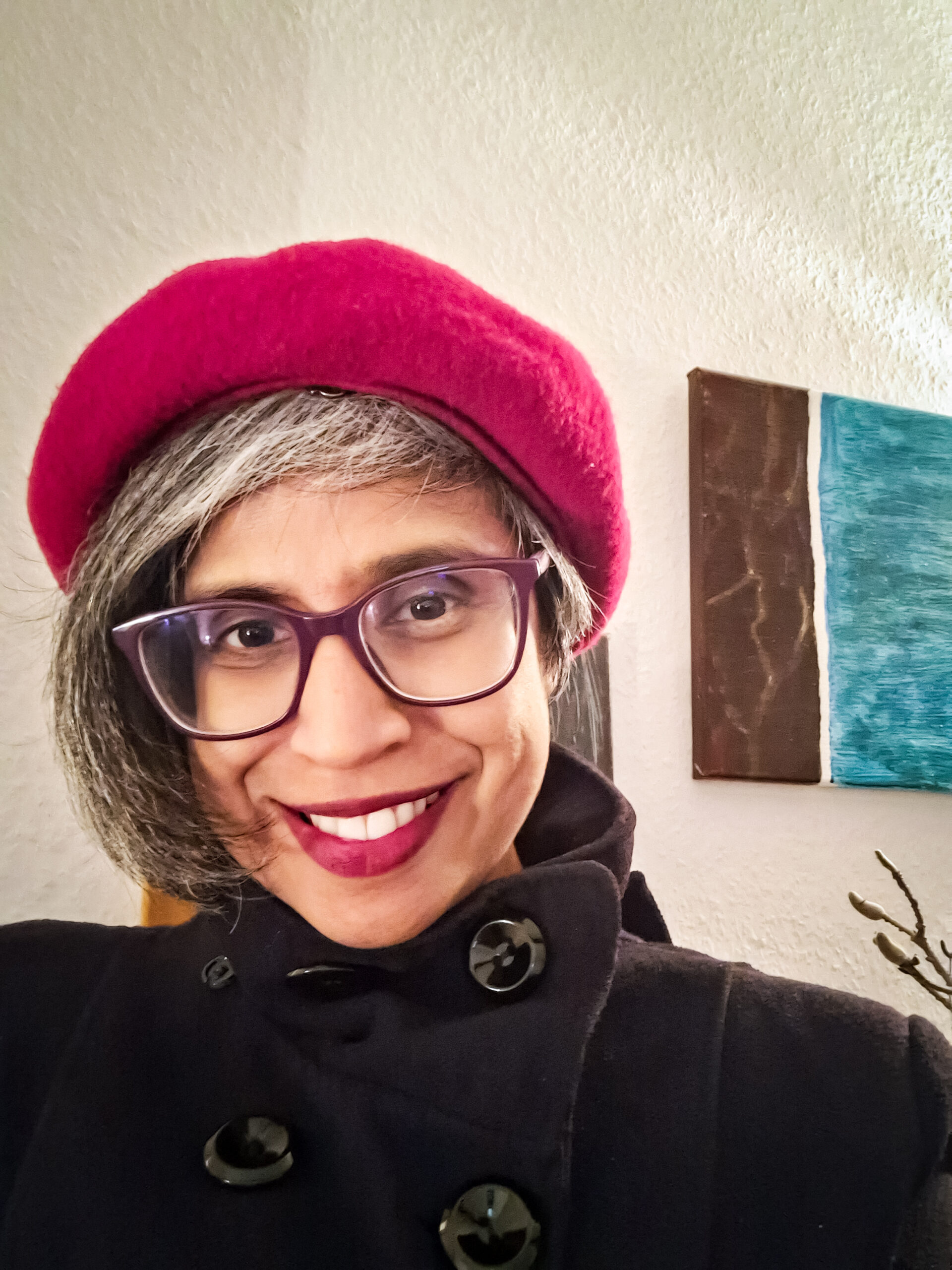
Rapti Siriwardane-de Zoysa (Ria)
I grew up between Abu Dhabi, Colombo, and Singapore. This sense of drift continues to shape my writing and teaching in maritime histories and cultural ecologies in the Indian Ocean world. I hold a PhD in Development Anthropology and an MSc in Environmental Geography (Bonn, Oxford), with earlier training in sociology, Anglophone literature, and theatre studies at the National University of Singapore.
My work explores how legacies of empire and development continue to shape oceanic and urban worlds, and how precarity is unevenly experienced, sensed, and often disavowed across diverse settings. I am particularly interested in how (be)longing and precarity are understood in vernacular ways in relation to environmental change, and in whose knowledge comes to define crisis, how these conditions are narrated, and under what circumstances certain voices are recognised as authoritative.
Central to this inquiry is how lived experience constitutes frontline collectives as knowing subjects, even as particular forms of knowledge are rendered extractable and portable within development and environmental governance. This focus extends to multispecies relations, tracing practices of care, kinship, stewardship, domestication, and commodification across human and more-than-human worlds. Much of my work follows the movements of aquatic species, people, sediments, infrastructures, and spectral presences, foregrounding the uneven labours and responsibilities of repair that emerge under extraction, overbuilding, and abandonment.
These concerns converge across four interrelated strands: intertidal worlds; epistemic justice; multispecies sociality; and sacred and spectral ecologies. I work ethnographically, integrating oral history, decolonial grounded theory, folkloric practice together with sensory, embodied approaches such as photovoice, archival montage, and transect walking.
Dr. Rapti Siriwardane-de Zoysa (Ria)
Raised between Abu Dhabi, Colombo, and Singapore, I’ve always been drawn to the spaces in between. This sense of drift and crossing continues to shape how I approach my work as a writer, anthropologist, and lecturer exploring cultural ecologies in the Indian Ocean world and the Asia-Pacific.
I am particularly interested in how intersecting logics of empire and development continue to shape coastal and urban frontiers—and how precarity itself is imagined, disavowed, and differently valued across these spaces. In continually asking whose knowledge counts in defining environmental crisis and why, these inquiries guide my research across four thematic areas: intertidal worlds, epistemic justice, multispecies relations, and speculative infrastructures.
I hold a joint appointment at the Bonn Center for Dependency and Slavery Studies (BCDSS) and the German Institute of Development and Sustainability (IDOS), where I coordinate the partnership programme and co-lead the research group POESIS (“Power, Equity, and Epistemic Dependencies in Oceanic Spaces”). I also serve on the editorial boards of a new Springer book series Marine Social Sciences and the Blue Humanities, together with the journals Ocean and Society and Maritime Studies.
I’m presently completing my habilitation project, Haunting the Developmental Sea, based on seven years of ethnographic research in the Indo-Malay-Philippine archipelago. This work explores the interplay of epistemic and infrastructural dependencies in semi-submerged landscapes, focusing on ghostly afterlives in the wake of littoral extraction, overbuilding, and abandonment.
Themes
Over the past twenty years, my field-based collaborations across the Indo–Malay–Philippine archipelago and Sri Lanka have explored urban struggles shaped by wartime and post-disaster eviction, land subsidence, coastal reclamation, and the speculative politics of floating cities, while foregrounding how littoral collectives improvise and rework everyday life.
I´m presently completing my habilitation, Haunting the Developmental Sea, based on seven years of ethnographic storying across island South and Southeast Asia. The project examines the interplay of epistemic and infrastructural dependence in semi-submerged and toxified land- and seascapes also crosscutting the pandemic years, spanning Java, Metro Manila, Colombo, and Singapore. It centers a cast of sojourning agents including coastal dwellers, restless ancestors, sediments, mangroves, milkfish, infrastructural ruins, spectral jasmine, maritime cargo and more—whose movements shape what the sea returns and what it holds as a submerged archive in motion.
Past & ongoing collaborations
Previously, I was based at the Leibniz Centre for Tropical Marine Research (ZMT) and taught maritime anthropology and development sociology at the University of Bremen (2015–2023), where assisted in the co-founding of the Bremen NatureCultures Lab.
As a co-principal investigator, I have led projects funded by the DFG, the US SSRC, and the Leibniz Association, collaborating with partners across the Dutch Caribbean and island Southeast Asia (Indonesia, Malaysia, the Philippines and Singapore). My ethnographic practice is rooted in long-term engagement and reciprocity; I´ve had the opportunity of learning from beach-seiners and longline fishers in Sri Lanka´s postwar northeast, Javanese jasmine farmers and shrimpers, rumah-lanting dwellers in South Kalimantan, disaster managers in Manila, and mangrove conservationists in Bonaire, alongside a diversity of activists, artists, scientists, engineers, architects, and civil servants working across Southeast Asia and the Netherlands who have trusted me with their stories.
Our last transregional project, BlueUrban (DFG-funded, 2020–2023), examined how land reclamation, cultural histories of sand, giant seawalls and other ´adaptive´ infrastructural interventions transform social relations between cities and seas in the Indo-Malay-Philippine archipelago. I latterly turned my focus to specultative visions of floating cities and infrastructural futures, tracing their contested meanings for coastal collectives while bringing together older concerns around oceanic privatisation and waterfront development.
Before and beyond academia, I´ve been at the Climate Secretariat (Bonn), CGIAR-WorldFish Centre (Penang), the Alola Foundation (Timor-Leste), and Singapore’s National Youth Council and Beyond Social Services (2004-2015).
I presently serve as associate editor for Maritime Studies and as an editorial board member for Ocean and Society and the Springer book series Marine Social Sciences and the Blue Humanities. Throughout these roles, writing has remained my central practice and first love. This led to the very recent founding Ink & Ethos, an initiative that bridges academic storytelling and multigenre narrative. I am in the process of completing a continuing education programme in creative non-fiction at City St George´s, University of London, alongside coacher training programmes with the Editorial Freelancers Association.